
GRAND TAIPEI: THE POROUS CITY
| Degree design thesis for European Master’s in Urbanism |
|
|---|---|
| Planning | KC Huang |
| KY Lian, SC Wang | |
| Consultant | |
| Client | Kinsa Township Government |
| Location | Kinsa Town, Kinmen, Taiwan, ROC |
| Dimensions | Area: 8,000 (m²) |
| Program | Green Transportation Hub |
| Green Energy | |
| Tourist Facility | |
| Planning Period | 2010–2011 |
| Category | Planning, Brownfield, |
| regeneration, | |
| post-military facility, | |
| net-zero community, | |
| green transportation, | |
| green energy, | |
| water management | |
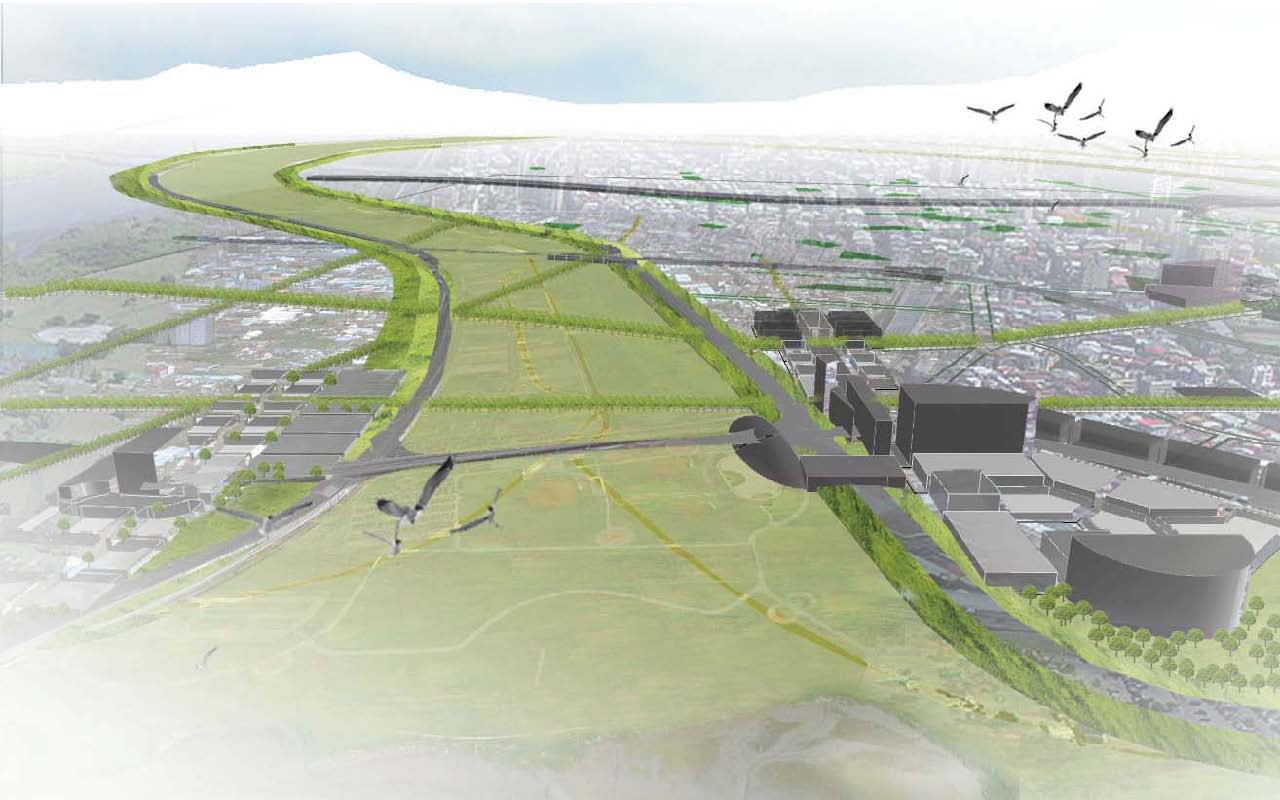
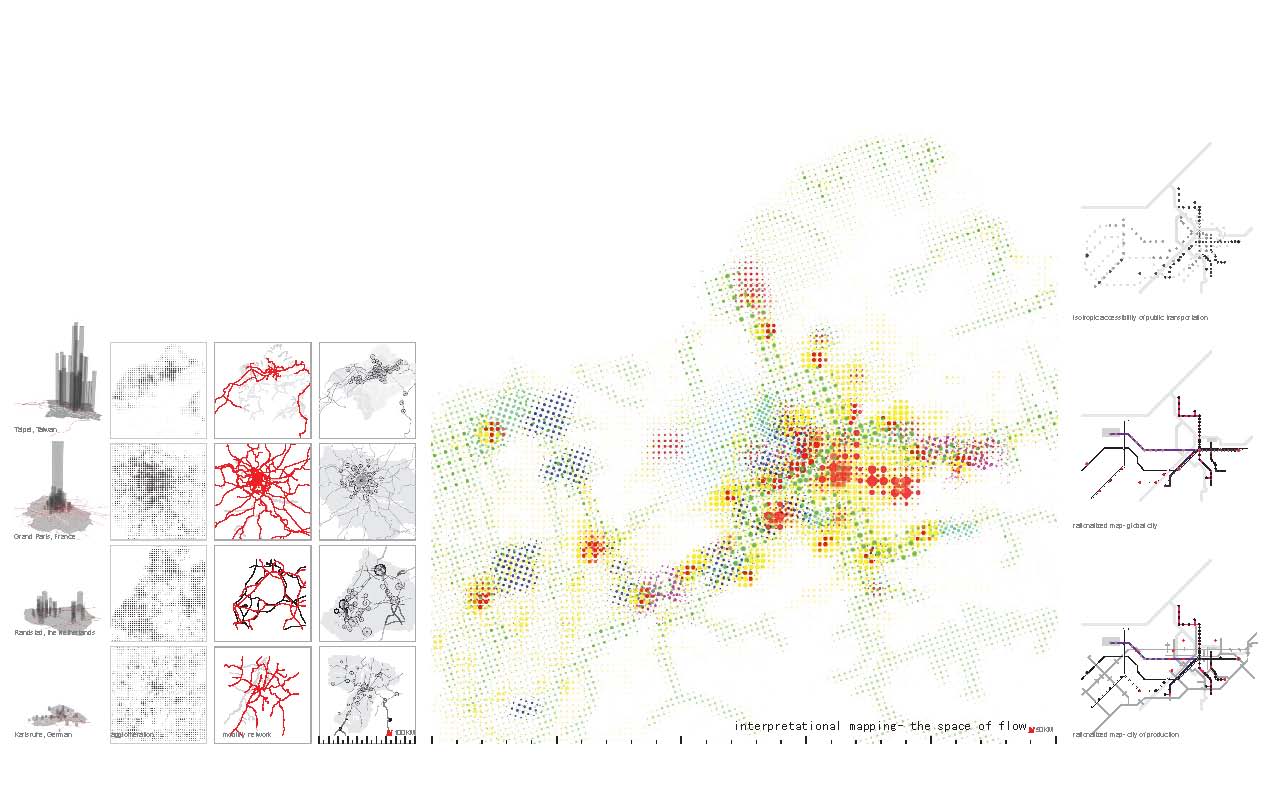
This is an example of the “design by research” and “research by design” process. We focus particularly on three aspects: mobility infrastructure, water management, and green energy. The master plan is based on the strategies derived from the research process.
The master plan for the community aims to create a self-sufficient unit in terms of mobility, water, and energy. This same concept can be applied to the entire island of Kinmen, thereby enabling the whole island to become self-sufficient.
Our analysis led to the following conclusions:
1. Mobility
The mobility network in Kinmen is not concentric, nor is its urbanization. In response, we propose an isotropic, low-speed network based on bicycles and electric vehicles to replace fuel-powered vehicles. Several supply nodes for water and electricity have been selected to support the system.
2. Water
Ironically, Kinmen Island suffers from water scarcity due to seasonal precipitation and topographical conditions. We propose a distributed water storage system to supplement the existing concentric reservoirs.
3. Energy
Abundant sunshine and wind offer the opportunity to establish a green energy system in Kinmen. There is ample space within the planning area for solar panels and wind turbines to generate energy. With sufficient equipment, it is possible to achieve the net-zero energy community proposed here. From an economic perspective, the energy industry could also serve as an alternative to agriculture.
Given the available technological support, establishing a net-zero community in Kinmen is not impossible. What matters most is having policies that are truly committed to making it happen. The potential impact of such a community is demonstrated in our research proposal. Unfortunately, we were unable to put this proposal into practice. There are many other concerns and interests at play. However, this experience has allowed our team to delve deeper into the subject, and we have certainly learned from it. In the long term, the concept of a self-sufficient unit can still serve as inspiration for a net-zero Kinmen.